February 24, 2026 | Read Time: 1 Min. | Volunteers

February 24, 2026 | Read Time: 1 Min. | Volunteers
Volunteers gathered to learn about cultural communication and cultural dimensions
On January 27, a group of 18 volunteers gathered at CBFY to learn, discuss and engage in cultural communication. Aileen Singh, our Program Team Lead for North of McKnight, gave a presentation to the group about how we understand culture, and cultural differences in various settings. Shannon Stannard, the CBFY board chair, also joined our gathering, shared her experiences and participated in our discussions and group activities.
When we arrived, we all introduced ourselves, sharing our names, home countries, how long we’ve been in Canada, and something special about our culture. Many of us highlighted similar cultural aspects: friendly people, excellent food, and diversity.
Aileen then asked us to reflect on how we understand culture – she asked us to think about cultural biases and beliefs we may have, with the goal of building awareness to better support immigrant families. CBFY is, after all, the “work of many hands, but one heart,” Aileen said.
As a group, we discussed how culture can be transferred among people, typically from one generation to another, often through language. Alieen explained that what we often see in culture is shaped by what we cannot see. These visible aspects of culture are categorized by ways of doing: these are things that can be observed, like language. But invisible aspects of culture are ways of thinking and ways of being, like values, beliefs, and assumptions. While unseen, these often shape what people can see about cultures.
Aileen asked us to think about ethnocentrism: the belief that one’s own way or own culture is better than another. As an example, we discussed the differences in how elders are cared for across the world. Here in Canada, it is typical to send parents or grandparents to care homes, while in other countries, like the Philippines, it is standard for parents and grandparents to live with their families as they need more assistance. Neither option is better than the other, but many people have strong opinions on what they would do, based on their cultural beliefs.
Throughout the workshop, we were called to reflect on our own biases, and on what we say to ourselves. Aileen invited us to look at every person with a sense of curiosity. We may never get to 100%, she said, but it is something we should always work on.
We also discussed cultural dimensions and where we lie in these spaces. Cultural dimensions are cultural aspects like degree of directness, authority and power, individual versus collective, how we prioritize tasks, and risk tolerance. For some of us, these dimensions have changed as we live in Canada.
When speaking about authority and power (and whether it be hierarchical or egalitarian) we shared stories of cultural differences when migrating to Canada. Many people were not used to the vague status markers, democratic decisions, and informal settings of Canadian workplaces. People shared their experiences, referring to their direct boss more formally than many in Calgary would, because they were used to more emphasis on rank and seniority while working. We talked about how to acknowledge these cultural differences when helping students in after school programs or mentorship programs. In small groups, we filled out our own cultural spectrums, understanding where we sit in the various cultural dimensions and recognizing if our beliefs have shifted since living in Canada.
Culture is not static, it shifts in generations, Aileen said. Culture explains tendencies and shapes behaviors but not personality traits: these often change when you move to new places. For culture, context really matters. If you want to be culturally competent, Aileen emphasized reflection on ourselves and our bases and beliefs. If we can become less ethnocentric, ask questions, and be willing to learn, we can become more culturally aware.
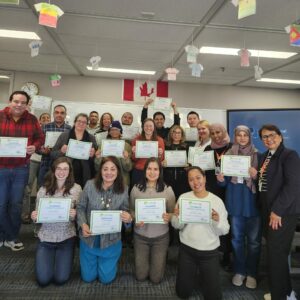
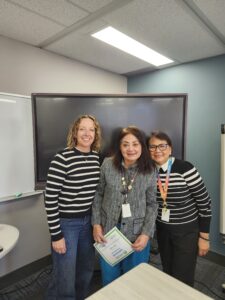
After the presentation and discussion, Arnida Guillermo, the volunteer coordinator, handed out certificates to all who participated at the Bridge Circle. When giving the certificates, Arnida read our names, and told the other volunteers our role at CBFY. Arnida remembering the work each and every one of us is doing for the organisation, made us feel valued as volunteers.